Concrete structures in Dubai face constant stress due to heat, humidity, groundwater pressure, and coastal environmental conditions. Small cracks may appear harmless at first, but they often become entry points for moisture and structural deterioration. When ignored, these issues can lead to water leakage, corrosion inside reinforced concrete, and costly repairs.
According to the UAE National Center of Meteorology, summer temperatures in the UAE regularly exceed 45°C. Extreme temperature changes cause concrete surfaces to expand and contract repeatedly, which increases the likelihood of cracks in walls, slabs, and foundations. Professional crack injection repair helps restore structural integrity while preventing water intrusion in residential, commercial, and industrial buildings.
Hairline Cracks That Continue to Expand
Thin surface cracks are common in concrete structures, especially during curing. The concern begins when those cracks become longer, deeper, or more visible over time.
Property owners in Dubai often notice these cracks around:
- Basement walls
- Roof slabs
- Parking structures
- Staircase joints
- Retaining walls
Cracks wider than 3 mm usually require detailed inspection, according to guidelines published by the American Concrete Institute (ACI). Reappearing cracks after cement patching are another warning sign. Surface fillers may temporarily hide the issue, though they rarely stop water penetration or structural movement.
Professional contractors typically use epoxy injection systems for structural crack bonding. Products such as Sika Injection Systems and Fosroc Nitofill EP are commonly used in UAE repair projects because they penetrate deeply into concrete voids.
Water Leakage Around Cracked Concrete
Water seepage near cracks often indicates hidden structural damage. Once moisture enters reinforced concrete, it begins affecting the steel reinforcement bars inside the structure. Over time, corrosion expands and weakens the surrounding concrete.
This problem is frequently reported in:
- Underground parking areas
- Water tanks
- Lift pits
- Roof decks exposed to direct sunlight
- Bathrooms and wet utility spaces
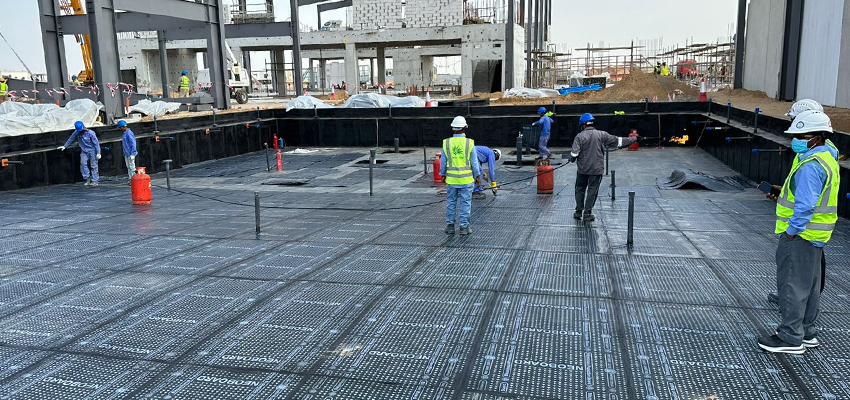
Dubai Municipality emphasizes proper waterproofing maintenance for concrete structures exposed to moisture and groundwater pressure. Dubai Municipality provides construction and maintenance standards that many waterproofing contractors follow across the UAE.
Polyurethane injection systems are widely used for active water leakage repairs. Materials such as Sika Injection-201 CE expand inside cracks and block water movement effectively. This method is commonly selected for basements and underground concrete structures where leakage remains active.
Rust Stains and Peeling Concrete Surfaces
Rust-colored marks on walls or ceilings usually point to corroding steel reinforcement inside concrete. This issue becomes more common in coastal areas of the UAE where chloride exposure accelerates corrosion.
When steel reinforcement rusts, it expands and pushes against the surrounding concrete. The result is concrete spalling, loose fragments, and weakened structural sections.
Signs often include:
- Flaking concrete near columns
- Surface swelling
- Exposed reinforcement bars
- Damp patches near cracks
The Dubai Central Laboratory Department has published studies highlighting the impact of chloride contamination on reinforced concrete durability in Gulf environments. Early crack injection repair in Dubai helps reduce moisture penetration before corrosion spreads deeper into the structure.
Doors and Windows Losing Alignment
Structural movement sometimes appears in places people least expect. Windows that suddenly become difficult to close or doors that no longer align properly may indicate foundation settlement or slab movement.
In some Dubai developments, soil movement and groundwater fluctuations contribute to structural stress beneath buildings. Cracks often appear diagonally near door corners or window edges during these conditions.
A professional inspection helps determine if the issue is cosmetic or linked to structural movement. Contractors may combine crack injection repair with waterproof coatings and expansion joint treatment to stabilize affected areas.
Persistent Damp Smells Indoors
Moisture trapped behind walls and ceilings creates long-term indoor air quality problems. Damp odors inside apartments, villas, or offices often indicate hidden water intrusion through cracked concrete surfaces.
Common inspection points include:
- Ceiling corners
- AC duct surroundings
- Basement walls
- Roof slab joints
The World Health Organization Indoor Air Quality Guidelines notes that excess indoor moisture contributes to mold development and respiratory concerns. Waterproofing specialists typically use moisture meters and thermal imaging equipment to locate concealed leakage areas before injection repair begins.
Why Surface Repairs Often Fail?
Standard cement patching rarely solves deep structural cracks. Concrete movement and water pressure continue beneath the surface, causing repairs to fail repeatedly.
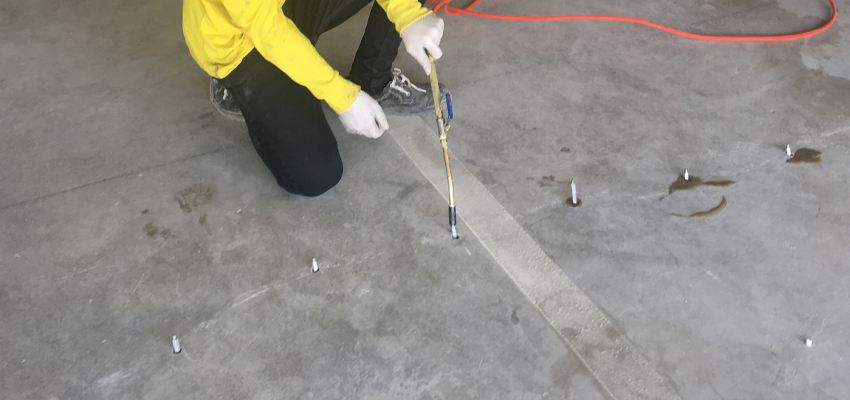
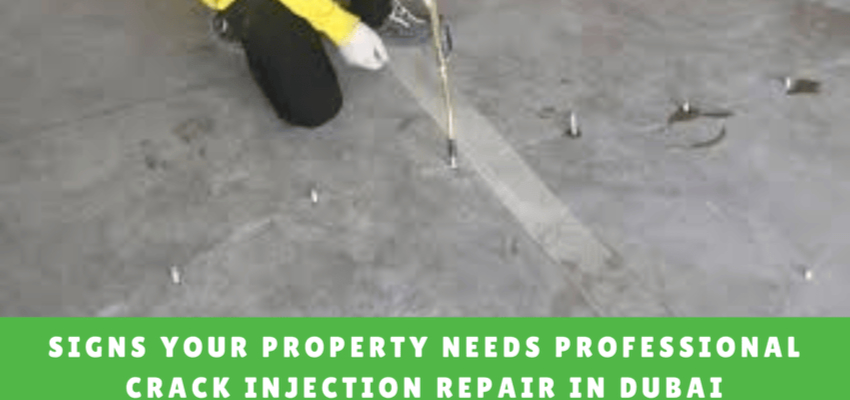
Professional crack injection repair works differently. Contractors install injection ports directly along the crack line and inject specialized materials under controlled pressure. The selected material depends on the type of damage.
Common systems include:
- Epoxy injection for structural bonding
- Polyurethane injection for active leakage control
- Low-viscosity resin systems for fine cracks
Brands such as Fosroc, Sika, and Master Builders Solutions are frequently specified in UAE waterproofing projects due to their performance in high-temperature environments.
Choosing the Right Crack Injection Repair Contractor in Dubai
Not all crack repairs follow the same approach. Experienced waterproofing contractors begin with site inspection, crack analysis, and moisture testing before selecting repair materials.
Property owners should ask:
- Which injection material will be used?
- Is the crack structurally active?
- Will waterproof coatings be applied afterward?
- Does the contractor provide maintenance support?
Companies familiar with Dubai’s climate conditions usually deliver more reliable repair solutions because they understand the impact of heat exposure, groundwater pressure, and coastal humidity on concrete structures.
Conclusion
Cracks in concrete rarely improve without proper treatment. Early warning signs such as water leakage, rust stains, recurring wall cracks, and damp indoor conditions should never be ignored. Professional crack injection repair helps protect structural stability while improving waterproofing performance in residential and commercial buildings across Dubai.
Property owners who schedule inspections early often avoid larger structural repair costs later. Combining crack injection with proper waterproofing systems also extends the lifespan of concrete structures exposed to the demanding UAE climate.
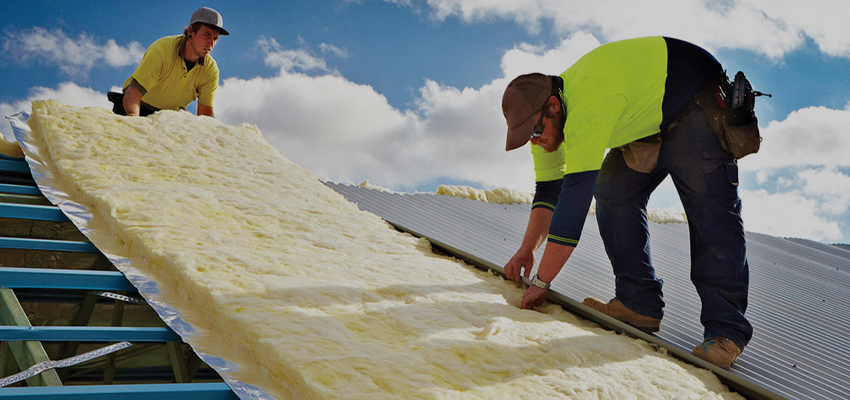
To learn more, click: Reducing AC Costs in Dubai with Proper Thermal Insulation